The short answer is no. And if that’s the main reason you were considering it, you might not be the exact person we’re looking for. No offence.
Stem cell donation is voluntary, and that’s not an accident. But not getting paid doesn’t mean you’re out of pocket. The team covers every expense, and what you get in return is the chance to be the reason someone with blood cancer gets more time. Which, when you think about it, is a slightly better deal than a pile of cash and a thank you letter.
Why the system stays voluntary
When money is involved, people sometimes sign up without fully thinking it through, or they hide health conditions to stay eligible. That puts both the donor and the patient at risk.
The registry wants people who show up because they want to help. Those are the donors who say yes when the call comes, go through the process properly, and are someone the patient on the other end can actually rely on. Keeping it voluntary protects everyone. Simple as that.
Think of it this way. The person waiting for a match has blood cancer. They need the right donor at the right time. The last thing they need is someone who signed up for the wrong reasons and backs out when it counts.
What does get covered
Here’s the part people don’t always realise. Not getting paid is very different from being out of pocket.
The team covers all medical costs in full, including assessments, injections, and the donation itself, plus travel to and from the donation centre including flights if needed. If you need to stay away from home, they sort accommodation for both you and your support person. Meals on donation day are covered too.
In short, you donate your stem cells. You don’t donate your savings account.
What about lost wages?
Ah. This one comes up a lot, and the honest answer is: it depends.
You’ll need at least a day off around donation, possibly a few more depending on how your body responds to the injections beforehand.
Some workplaces offer special leave for stem cell donation, which is worth checking before you commit.
The process doesn’t formally reimburse lost wages. It’s worth having that conversation with your employer early. Most people find they’re more supportive than expected once they understand what’s involved.
It’s a fair question to ask. Just maybe don’t lead with it.
What donation actually involves
Most donations happen through peripheral blood stem cell collection, which works like a long plasma donation.
In the days before, you have daily injections that encourage your body to move more stem cells into your bloodstream. Some people feel a bit achy or tired during this time, similar to mild flu symptoms. That’s just your body doing exactly what it’s supposed to. Most people manage it fine with rest and paracetamol.
On donation day you sit in a chair, blood goes out one arm through a machine that collects the stem cells, and everything comes back through the other arm. No general anaesthetic. Usually four to five hours.
Abbey described it as a few hours in a comfy chair with snacks and daytime TV. She was back at work the next day.
For Abbey’s full story read Donor Voices: Abbey Donated Stem Cells to Her Mum
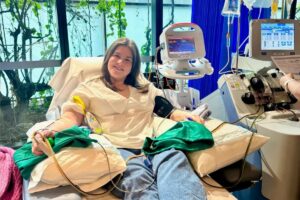
Abbey donated stem cells. This photo was taken mid-donation. Yep, that’s a real smile.
Less commonly, doctors collect stem cells directly from the hip under general anaesthetic. This happens in a small number of cases when it’s the best option for the specific patient, and you’d know well in advance.
Please know you’ll always have the choice of the donation method. Either way, the team makes sure you’re fully across it before anything happens.
The real return on investment
Most people who join the registry never get called to donate. You could be on the list for decades and never hear a thing. That’s not a bad outcome. It just means someone else was the right match for the patient who needed one.
But if you do get called, it means you might be the only person in the world who matches a specific patient.
For someone with blood cancer who has run out of options, finding a match isn’t just good news. It’s everything. It’s more time with their kids, their partner, their mates. More ordinary days that suddenly don’t feel ordinary at all.
No payment can really put a number on that. And nobody’s tried.
Ready to join?
Aged 17 to 35, generally healthy, green or blue Medicare card. That’s all you need.
A few minutes online, a cheek swab kit to your door, and you’re on the registry. Most people who sign up will never get called. But for the patients who do find their match, it changes everything.
Sign up through the TLR Foundation’s partner page.
Be a legend. Save a life.