It’s one of the first things people Google before deciding whether to sign up. What are the risks? Is it safe? What will it actually feel like?
The honest answer is that stem cell donation is considered very safe, and for most donors the side effects are mild and temporary. But safe doesn’t mean nothing happens, and you deserve a straight answer rather than a brochure version. So here it is.
Is stem cell donation safe?
Yes, stem cell donation is considered very safe. Every donor gets a full medical check before anything happens, and a dedicated medical team supports you throughout the entire process.
That said, most medical procedures involve some level of side effects, and stem cell donation is no different. What those side effects look like depends on which donation method applies to you. For most donors, they’re manageable and short-lived.
The most common method: donating through your blood
Around 90 percent of stem cell donations happen through peripheral blood stem cell donation, or PBSC. It works like a long plasma donation and doesn’t involve surgery or general anaesthetic.
In the days before donation, donors have daily injections of a medication called G-CSF. This nudges your body into producing more stem cells and pushing them into your bloodstream where doctors can collect them.
Side effects from G-CSF injections
This is where most donors feel something. Body aches are the most common side effect, and they usually mean the medication is doing exactly what it’s supposed to. Some donors also feel tired, fluish, or get a mild headache during this time.
Paracetamol and rest usually sort it out within a day or two. Some donors barely notice anything at all.
What happens on donation day
On donation day you sit in a chair while blood goes out one arm through a machine that filters out the stem cells, and everything comes back through the other arm. No general anaesthetic. The whole process usually takes four to five hours.
Some donors feel lightheaded or notice a tingly sensation during the process, which nurses can help with straight away. You’re monitored the whole time by medical staff, so you’re not managing anything alone.
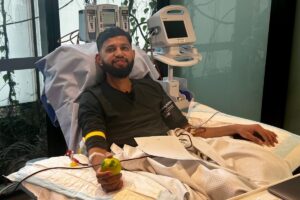
Aadil donated stem cells through his blood. This is what donation day actually looks like.
The less common method: donating from the hip
Around 10 percent of donations involve collecting stem cells directly from the hip bone under general anaesthetic. Doctors recommend this method when it gives the specific patient the best chance of a successful transplant. You always have the final say on the donation method.
Anaesthetic risks
Some donors feel nauseous or groggy after waking up from the anaesthetic. Serious reactions are rare. The team walks you through everything beforehand so nothing comes as a surprise.
Pain and recovery
You might feel sore in your lower back or hips for a few days afterwards. Most donors recover well within about a week and get back to normal life without any lasting issues.
Infection or bruising
There’s a small chance of bruising, bleeding, or infection at the collection site. The team takes every precaution to keep that risk low and supports you throughout recovery.
Hip donation is more involved than PBSC donation, but it’s still closely supervised and well managed by experienced medical staff.
Do your stem cells grow back?
Yes, completely. Your body produces stem cells continuously, and donating some doesn’t affect that process.
This is one of the biggest concerns people have before signing up, so it’s worth being clear.
After PBSC donation, your body typically replaces the donated stem cells within a couple of weeks. After hip donation, the marrow grows back over the following weeks.
Studies show no long term health issues from donating stem cells.
Your body recovers. Someone else gets a fresh start.
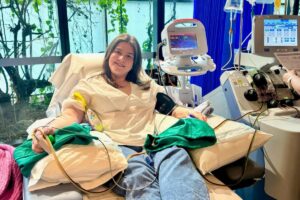
Abbey donated stem cells through her blood. She was back to normal the next day.
The emotional side people don’t always mention
Donating isn’t just a physical thing. It’s completely normal to feel nervous beforehand, especially if you’ve never done anything like it. Most donors find that anxiety settles quickly once they understand the process and meet the medical team.
Many donors also find themselves thinking about the person they’re helping. In Australia, donors can receive anonymous updates after donation, and in some cases donor and recipient can choose to connect later if both sides agree. For some people that becomes one of the most meaningful experiences of their life.
If any part of the process feels overwhelming, the medical team and support staff are there to help. You don’t go through any of it alone.
Why most donors say it was worth it
The risks of donating stem cells are real. They’re not nothing. But for most donors they’re mild, temporary, and manageable. A few achy days, a few hours in a chair, and a short recovery.
For someone with blood cancer on the other end of that match, a stem cell transplant may be their only option. That’s why donor after donor says the same thing when it’s over. It was worth it.
For a fuller picture of what the donation process actually feels like from start to finish, read What Really Happens to Your Body When You Donate Stem Cells
Ready to join the registry?
Aged 18 to 35, generally healthy, green or blue Medicare card. That’s all you need.
A few minutes online, a cheek swab kit to your door, and your details go on the registry. Most people who sign up will never get called to donate. But for the patients who do find their match, it changes everything.
Sign up through the TLR Foundation’s partner page.
Be a legend. Save a life.