It’s one of the most common questions people ask before joining the stem cell donor registry. Does donating stem cells hurt?
You might have Googled it just now.
If you’re searching that question, there’s a good chance you’re genuinely thinking about signing up. That’s exactly the right thing to think through properly.
The honest answer? You might feel some temporary aches, but serious pain is uncommon and it passes quickly.
The injections before donation can cause short term aches. The collection itself works in a similar way to a long plasma donation.
When people first hear about stem cell donation, they often imagine something much more extreme. Surgery. Serious pain. Long recovery.
That’s not how most donations work.
For most donors, any discomfort is manageable and short lived.
And it matters. Because for someone being treated for blood cancer, those stem cells could be life saving.
What donors actually experience
Most people searching “does donating stem cells hurt” are trying to picture what the experience is going to feel like for them.
In Australia, around 90% of stem cell donations happen through the bloodstream. Doctors call this peripheral blood stem cell donation.
A few jabs in the days leading up to donation day. And then on the day, blood leaves one arm, a specialised machine separates the stem cells, and the remaining blood returns to the other arm.
A smaller number of donations use bone marrow donation. Doctors perform this procedure in hospital under a general anaesthetic and usually request it when the patient is a baby or small child with certain cancers such as leukaemia. Importantly, donors always choose which method they’re comfortable with.
The part most donors worry about is what actually happens before donation day.
First, doctors make sure it’s safe for you to donate
If you’re identified as a possible match, doctors first confirm two things.
You must be a suitable match. And you must be healthy enough to donate.
The medical team runs blood tests, reviews your medical history and completes a health assessment.
You’ll have plenty of time to ask questions and make sure you understand exactly what’s involved.
Doctors only move forward when they’re confident donation will be safe for you.
The injections before donation
If doctors confirm you as the best match and clear you medically, you’ll receive a medication called G-CSF for four days before donation day.
These daily injections encourage your body to release extra stem cells into the bloodstream so doctors can collect them.
Let’s be honest. No one likes needles.
The needle used for these injections is very small, similar to the kind diabetics use for insulin.
Some donors notice temporary side effects during these few days.
Bone or muscle aches, headaches, flu like symptoms and tiredness are the most common, but a few paracetamol usually clears things up.
Your bone marrow is producing far more stem cells than usual. In simple terms, it’s going into overdrive.
If you’d like to understand more about this step, you can read our blog Why do I need injections before donating stem cells?
For the donor, the discomfort usually lasts a few days.
For the patient waiting for a transplant, those stem cells may be their only chance.
What donation day feels like
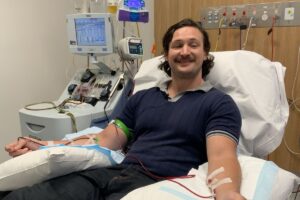
On donation day, you’ll sit in a comfortable chair while your blood circulates through a specialised machine that collects stem cells and returns the rest of your blood.
The process usually takes four or five hours, so you’ll need to take the day off.
A nurse places a cannula in each arm. A cannula is a small flexible plastic tube and allows some movement during the donation. It means you’re not stuck with a needle in your arm the whole time, which is usually far less dramatic than people imagine.
Most donors say the anticipation is worse than the reality. Your brain builds it up far more than the actual day.
Once everything is set up, there isn’t much to do. In fact, it can be a bit boring.
Most people spend the time watching Netflix, listening to music, scrolling on their phone or chatting with the nurses. Some people even have a nap.
After the donation, your body quickly replaces the donated stem cells.
You can read about recovery in Recovery After Donating Stem Cells
How long do side effects last?
Side effects from the G-CSF injections usually appear during the few days before donation.
For most donors, those symptoms settle within a day or two after donation day.
Your body replaces the donated stem cells quickly, and many donors return to normal activities soon afterwards.
Most people only take the donation day itself off work.
Joining the registry is a commitment
Joining the stem cell donor registry isn’t something you should do lightly.
Doctors only search the registry when a patient with blood cancer needs a stem cell transplant. If you’re identified as the best match, that patient may rely on you.
Most people who join the registry never receive a call.
But if you do, someone’s life may depend on that decision.
That’s why it’s important to understand the process before signing up.
We want people on the registry who understand what’s involved and will follow through if the call ever comes.
Should fear of pain stop you signing up?
You don’t need to be fearless to join the stem cell donor registry. You just need to be informed.
Most people who sign up never donate. But if you’re identified as a match, a medical team will guide you through every step.
If you’re aged 18 to 35 and living in Australia, joining the registry takes just a few simple cheek swabs.
And if you’re reading this article, you’re already doing the right thing by learning what’s involved.
You can learn more or sign up here.