Stem Cell Donation and the LGBTQIA+ Community
Your gender and sexuality make zero difference in saving a life
Many people in the LGBTQIA+ community have been told they can’t donate blood. That’s caused confusion and frustration.
Donating stem cells is different.
What matters isn’t who you are or who you love. It’s whether you’re willing to help. The Aussie stem cell donor registry is stronger when the LGBTQIA+ community is included.
Until recently, the only way to join the stem cell registry was when donating blood. That excluded many in the LGBTQIA+ community. Now you can join Stem Cell Donors Australia with just a few simple cheek swabs. You sign up online and a kit is mailed to your door. For many people who want to help, this has made all the difference.
Aussies are are diagnosed with blood cancer every year
of Aussies needing a transplant currently rely on overseas donors.
You belong on the registry. You could be the one to save someone's life.
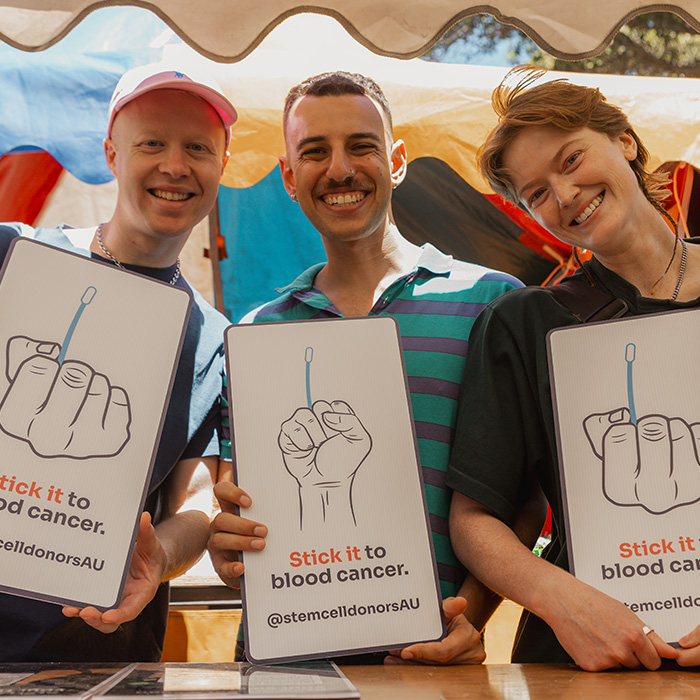
Who can join Stem Cell Donors Australia
If you’re aged 18 to 35, generally healthy, and hold a green or blue Medicare card, you may be eligible to join the stem cell registry.
Your sexuality or gender identity don’t affect that.
What’s most important is your willingness to donate if you’re ever a match.
If you’re matched, it’s because you’re a close genetic fit for someone who needs a stem cell transplant. You’ll be supported through the entire process.
You’ll be asked about gender. Here’s why
When you sign up with Stem Cell Donors Australia, you’ll be asked two things. Your sex assigned at birth and how you identify. These questions can feel personal, but they’re asked for practical reasons.
Sex assigned at birth is used for medical safety if you’re ever a match. Some aspects of stem cell donation and monitoring are influenced by biological factors, and this helps the medical team take good care of you. How you identify is about respect and making sure you’re addressed correctly throughout the process.
This information isn’t used to judge eligibility or exclude anyone. Your gender identity makes zero difference to the life-saving stem cells you could donate
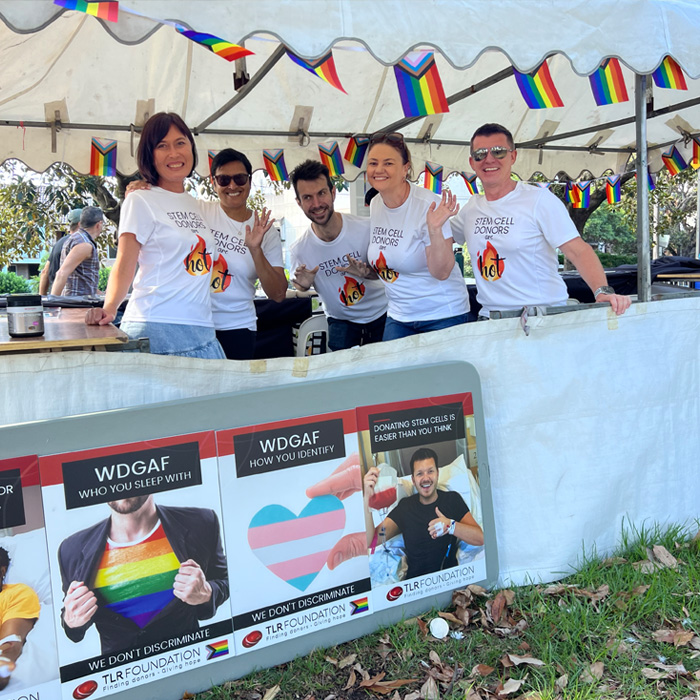
How Stem Cell Donation Works
Sign up to the register
It only takes a few minutes to join online through TLR Foundation’s sign-up page on Stem Cell Donors Australia. If you’re aged 18 to 35 and eligible, you could be someone’s perfect match. In fact you could be their only hope.
Swab at home
A cheek swab kit will be mailed to your door. Just follow the simple instructions, swab the inside of your mouth, and send it back. Easy.
Match with a recipient
Your details are added to the national registry. If you're ever identified as a match for someone with blood cancer, you’ll get a call.
Donate stem cells
If you’re confirmed as the best match, you’ll be asked to donate. Most donations are done through the blood, like a long plasma donations called PBSC. It’s safe, supervised, and genuinely life-saving.
Relax and recover
Most people are back to their usual routine within a day or two. You’ll be looked after every step of the way and you’ll have done something extraordinary.
This is a simple way for the LGBTQIA+ community to show up for others.
Not because you owe anyone anything. But because inclusion matters, and because being able to help matters. The stem cell registry is stronger when it reflects the community around it. That includes you. Your life, your identity, your relationships, your story.
If you’re eligible, joining the stem cell registry is a meaningful way to help someone with blood cancer who’s waiting for a match. Be a legend, save a life.
FAQ's
Can people in the LGBTQIA+ community donate stem cells?
Absolutely!
If you’re aged 18 to 35, generally healthy, and hold a green or blue Medicare card, you can sign up to the stem cell registry.
Your sexuality or gender identity don’t affect that. If you ever come up as a match, you may be able to save the life of someone with blood cancer.
Can gay and bisexual men donate stem cells?
Absolutely!
Gay and bisexual men can sign up to the stem cell registry and donate stem cells if they’re ever a match.
Eligibility for donating stem cells is based on age and health, and a willingness to help, not sexuality.
Can I sign up if I'm on PrEP?
Absolutely.
Taking PrEP doesn’t stop you from joining the stem cell registry or donating stem cells.
As long as you meet the age and health criteria, you can sign up.
Why will I be asked about my gender when I sign up?
You’ll be asked about your sex assigned at birth and how you identify.
Sex assigned at birth is asked for medical safety if you’re ever a match. How you identify is about respect and making sure you’re addressed correctly.
This information isn’t used to judge eligibility. Your gender identity makes zero difference to the stem cells you could donate.
Can trans, gender diverse and non-binary people donate stem cells?
Absolutely.
Trans, gender diverse and non-binary people can sign up to the stem cell registry.
When you sign up, you’ll be asked about your sex assigned at birth and how you identify. Sex assigned at birth is asked for medical safety if you’re ever a match. How you identify is about respect and making sure you’re addressed correctly.
Eligibility is based on age and health, not gender identity.
Do blood donation rules affect joining the stem cell registry?
They do not.
The government does exclude some in the LGBTQIA+ community from donating blood at Lifeblood. Some of the rules have recently been changed so gay and bisexual men are now eligible to donate plasma, which is a positive step forward.
But you don’t need to donate blood or plasma to join the stem cell registry. You can sign up online and a cheek swab kit will be sent to your door.
If you come up as a match, you may be able to save the life of someone with blood cancer. That’s legendary!
I can’t donate blood. How am I able to donate stem cells?
You don’t need to donate blood to join the stem cell registry.
You can sign up using a few simple cheek swabs.
If you’re eligible and ever come up as a match, you may be able to save the life of someone with blood cancer.
Do I need to visit Lifeblood to join the stem cell registry?
You do not. You can sign up online and a cheek swab kit will be sent to your door.
Some people also join the stem cell registry when donating blood or plasma at Lifeblood, which we encourage, but it’s not required.
What are the chances I’ll be called upon to donate stem cells?
For most people, it’s very unlikely to donate even once.
There are over 43 million people on stem cell donor registries worldwide, and most will never get a call.
If you are asked, it’s because you’re a close genetic match for someone who needs a stem cell transplant.
There have been a handful of cases where a donor is asked to donate again for the same person, but that’s incredibly rare.
I’ve always wanted to help but was told I couldn’t donate blood?
For a long time, many people in the LGBTQIA+ community wanted to help but were told they couldn’t.
The introduction of cheek swabs as a way to join the stem cell registry has opened up a genuine way help.
You’re welcome. You’re needed. And yes, you’re absolutely included.
Why have gay and bi men historically been excluded from donating blood?
Blood donation restrictions for gay and bisexual men were introduced during the early years of the HIV epidemic, when testing and screening were far less advanced than they are today.
Over time, those rules changed. For many years, gay and bisexual men were told they had to avoid sex with men for 12 months before donating blood. That was later reduced to three months.
While these rules were introduced for public health reasons, they’ve caused frustration and hurt for many people. Being told you can’t donate blood because you have a sex life left many people feeling excluded.
Blood donation eligibility in Australia is set by government policy. Lifeblood follows these rules and has advocated for change over many years.
Stem cell donation is different. The option to join the registry using cheek swabs has created a clear and inclusive pathway for many people who have always wanted to help.
What is stem cell donation?
Stem cell donation is when someone donates their blood forming stem cells to help treat a person with blood cancer or a serious blood disorder.
For some people, a stem cell transplant isn’t one option among many. It’s their only chance.
Most stem cell donations happen through the bloodstream and feel a lot like a long plasma donation. It’s usually much simpler than people expect.
Why do people need a stem cell transplant?
People need a stem cell transplant when their bone marrow can’t make healthy blood cells on its own.
This can happen because of blood cancers like leukaemia or lymphoma, or other serious blood disorders.
A stem cell transplant gives their body a chance to rebuild healthy blood cells again.
How does stem cell donation actually work?
First, you sign up and join the Australian Stem Cell Donor Registry using a cheek swab kit sent to your door.
If you’re ever matched with someone who needs a stem cell transplant, you’ll be contacted and guided through the process step by step.
Most donations involve collecting stem cells from your bloodstream. You’re looked after the whole time, and most people are back to normal life very quickly.
Is donating stem cells painful?
Short answer, for most people, no.
The donation itself usually feels similar to a long plasma donation. You’re awake, comfortable, and can read, scroll, or binge Netflix while it’s happening.
Some people feel tired or a bit achy for a short time, but serious pain isn’t the norm.
Is donating stem cells safe?
Absolutely. Donating stem cells is considered very safe.
It’s a well established medical process, with thousands of people donating stem cells around the world each year.
Donors are carefully checked before anything happens, and you’re supported throughout the entire process.
Most people recover quickly and get back to normal life. You’d be doing something pretty legendary along the way.
How long does it take to donate stem cells?
For most people, the donation itself takes four or five hours.
There’s also some preparation beforehand, which your medical team will guide you through, so nothing comes out of the blue.
Most donors are back to normal life the next day.
What's it actually like to donate stem cells?
For most people, it’s pretty uneventful.
The donation usually feels similar to a long plasma donation. You’re awake, comfortable, and can read, scroll, or nap while it’s happening.
It’s a big deal for the person receiving the cells. For most donors, it’s a few hours out of their day. You’d be doing something pretty legendary along the way.
Are there different ways to donate stem cells?
Yes, there are two ways to donate.
Most stem cell donations happen through the bloodstream.
A much smaller number involve collecting stem cells from bone marrow, which is done under anaesthetic.
Either way, you’re supported the whole time, and the medical team will guide you through exactly what to expect.
What are the risks of donating stem cells?
The risks of donating stem cells are incredibly low.
Whether it’s through the blood or directly from the bone marrow, it’s a well established medical process, and donors are looked after at every step of the way.
Most side effects are short term and manageable, like feeling tired or achy for a few days. Serious complications are rare, and you’re supported the whole way through.
Are there any long term risks from donating stem cells?
Thankfully not. There’s no evidence that donating stem cells causes long term health problems for donors. Hundreds of thousands of people have donated stem cells worldwide with no problems.
Your body naturally replaces the stem cells you donate.
Donors are followed up after donation, and most people go on with life exactly as before, just knowing they helped save someone’s life.
What are the side effects of the G-CSF injections?
G-CSF helps your body produce extra stem cells before donation.
Some people feel flu like symptoms for a few days, such as bone or muscle aches, headaches, or feel a little tired. This is totally normal and shows the G-CSF is working.
The side effects are temporary and usually settle once the injections stop. You’re supported the whole time. Because, yes, you’re a legend.
How long do G-CSF side effects last?
For most people, side effects last a few days while you’re having the jabs.
They usually settle quickly once the injections stop.
Most donors are back to feeling like themselves the next day.
Will I need time off work or uni to donate?
Most people will need a day off for the donation itself.
Some people also take a day or two around it, just to rest.
You’ll know what’s involved well in advance, so you can plan around work or uni. And some workplaces are pretty wonderful and will give you the day off to donate.
Will I be out of pocket if I donate stem cells?
Not even one cent!
If you’re asked to donate your stem cells, all costs related to the donation are covered, including travel, accommodation, and food.
Donating won’t cost you anything. Legend.
Will I get paid to donate stem cells?
No. Donating stem cells isn’t paid.
It’s a voluntary donation, not a job.
You’re giving someone a chance at life when they’ve usually run out of options. That’s a pretty incredible thing to do.
What support is available if I donate?
You’re supported the whole way through.
If you’re a match, you’ll have a dedicated medical team guiding you through each step, answering questions, and checking in on you before and after donation.
You’re not doing this alone. There’s a lot of care wrapped around donors, because what you’re doing really matters.
You’re Eligible 🏳️🌈 Make It Count
Signing up as a stem cell donor is easy. For someone with blood cancer, your decision could mean everything. If you’re aged 18 to 35 and in good health, your gender or sexuality makes zero difference. Your potential to save a life does.