Most people know about blood and organ donation. But ask around about stem cell donation and you’ll often get blank looks. That needs to change.
For some people living with blood cancer or other serious blood disorders, a stem cell transplant is their only hope. Yet many people still do not know how donation works, who can do it, or how easy it is to sign up.
What is stem cell donation
Stem cell donation happens when a healthy person donates blood forming stem cells to someone whose bone marrow no longer works properly. These healthy cells help the patient start making blood again.
Doctors use stem cell transplants to treat blood cancers such as leukaemia, lymphoma and myelodysplasia. They also use them to treat other blood diseases, including thalassaemia and aplastic anaemia.
This treatment can replace a damaged immune system and give someone another chance at life.
Why stem cell donation saves lives
Every year, thousands of people in Australia receive a blood cancer diagnosis. For some, chemotherapy and other treatments stop working.
Only about 25 percent of patients will find a suitable match within their family, usually a brother or sister. For everyone else, a matching donor from a stranger becomes their only hope.
That donor could be you.
Australia imports more than 85 percent of stem cells from overseas. This shows that not enough young and diverse people have joined the Australian registry.
When more Australians sign up, patients have a better chance of finding a match sooner, without long waits or added risks.
How to become a stem cell donor
Joining Stem Cell Donors Australia, the Aussie registry, is really simple. It takes about three or four minutes to sign up online, and a cheek swab kit arrives in the mail.
Swab your cheeks, post it back, and within six weeks you are officially on the registry.
So why does it take six weeks? Once you return your swabs, specialist laboratories complete tissue typing. This work happens carefully behind the scenes to make sure your details are accurate if you ever come up as a match.
How donating stem cells actually works
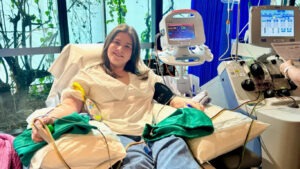
If you ever match with someone, here is what happens next.
Around 90 percent of donations happen through the bloodstream. For four days before donation, you receive a small daily injection of a growth factor called G CSF. This helps move stem cells from your bone marrow into your blood.
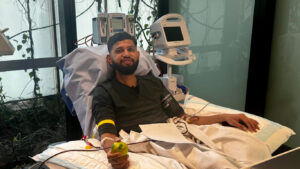
On donation day, blood flows from one arm into a machine that collects the stem cells and returns the rest of your blood through the other arm. The process takes about four to five hours. Most donors relax, watch shows, listen to music or scroll their phone.
About ten percent of donations happen under general anaesthetic. Doctors collect stem cells directly from the hip bone. The procedure takes about 45 minutes, and you do not need injections beforehand.
Doctors may recommend one method over the other, but you always have the final choice.
What are the side effects of donating stem cells
Like any medical process, stem cell donation can cause mild side effects. Most are short term and easy to manage.
If you donate through the blood, you will have a small daily injection for four days before donation. Some donors feel tired, achy or notice mild bone pain as their body produces extra stem cells.
These effects usually fade within a few days. Rest, hydration and paracetamol help most people feel comfortable.
On donation day, some donors feel light headed, experience chills, or notice a tingling feeling around the mouth. This tingling comes from a temporary drop in calcium and stops quickly with supplements.
If you donate under general anaesthetic, you may feel sore or bruised around the hips. This usually settles within about a week.
Donation teams support you at every step, from the moment you match to the time you head home. Most donors say the experience felt far easier than they expected and that they’d do it again in a heartbeat!
Who can become a stem cell donor?
You can join the registry if you:
- are aged 18 to 35
- are in good health
- have a green or blue Medicare card
You’ll stay on the registry until you turn 60. The registry focuses on younger donors because they give patients the best chance of survival and recovery, and a better quality of life after their transplant.
If you’re 36 or over, you might be wondering why you can’t join. It’s simply because outcomes are stronger when stem cells come from younger donors. Don’t worry, there’s still plenty of ways you can help.
You can spread the word to your family, friends and co-workers; donate to The TLR Foundation to help us recruit more young donors; or join us at one of our fundraising events like the City2Surf.
Every bit of support helps us give more people hope.
Why young and diverse stem cell donors are urgently needed
Every person who joins the registry could be someone’s only chance. But right now, there simply aren’t enough young and diverse donors.
Patients can only receive stem cells when they find a close genetic match.
That’s why we’re asking more young Australians from all backgrounds to sign up.
The more variety there is on the registry, the better the chance every patient has of finding their match.
Signing up doesn’t mean you’ll definitely be called. Most people never are.
But if your cells are the ones that can save someone’s life, that call will mean everything, for you and for them.
Why diversity matters in stem cell donation
When it comes to stem cell transplants, matching depends on DNA, which is linked to ancestry. That means patients are far more likely to find a match from someone with the same ethnic background or mix of backgrounds.
The challenge is that the current registry doesn’t yet reflect the full mix of cultures and communities that make up Australia. This means patients from Asian, Middle Eastern, African, Pacific Islander or mixed-heritage backgrounds often face the hardest search for a donor.
Every new person who joins helps close that gap, especially donors from under-represented communities. By signing up, you’re not just joining a list, you’re helping build a registry that reflects the real diversity of Australia and gives more people a fair chance at life.
Be a legend, save a life
Donating stem cells is one of the most powerful acts of kindness there is.
It’s safe, simple and it can mean the world to someone living with blood cancer.
If you’re aged 18 to 35, this is your chance to do something amazing.
Join the stem cell donor registry today.
References
- The TLR Foundation – Become a stem cell donor
- Stem Cell Donors Australia – Partners
- Cancer Australia – Stem Cell Transplant