Most people have heard of blood donation. Organ donation gets talked about a fair bit too. But stem cell donation? That one still catches people off guard.
If you’re here, you’ve probably seen the term somewhere and want to know what it actually involves. Maybe someone shared a post, maybe you saw a sign-up link, maybe you just got curious. Either way, you’re in the right spot.
Stem cell donation is how healthy people help someone whose body can no longer make blood properly. For people with blood cancer or other serious blood disorders, it can be the difference between running out of options and getting another chance. The process is simpler than most people expect, and it starts with a cheek swab you do at home.
Here’s what you need to know.
Why would someone need your stem cells
Your bone marrow makes stem cells. Stem cells make blood. When that system stops working properly, usually because of blood cancer or a serious blood disorder, some patients need healthy stem cells from a donor to restart the process.
Doctors use stem cell transplants to treat conditions like leukaemia, lymphoma, and myelodysplasia. They also treat non-cancer blood disorders like thalassaemia and aplastic anaemia. For the patients who need one, the transplant replaces a damaged immune system with a working one.
Around 75 percent of those patients won’t find a suitable match in their own family. That’s not bad luck. That’s just how the genetics work. You have roughly a one in four chance of matching a sibling, and the odds drop fast after that.
For everyone else, the match has to come from a stranger on the registry. That stranger could be you, sitting there in your trackies, having no idea your stem cells are the ones someone’s been waiting for.
How to join the registry
Joining the Aussie stem cell registry is simple. You don’t need a doctor’s appointment, a blood test, or a free afternoon. You need an internet connection and about four minutes.
Sign up online through Stem Cell Donors Australia, and they post you a cheek swab kit. Swab the inside of your cheeks, drop it back in the mail, and within about six weeks you’re officially on the registry.
To join, you need to be aged 17 to 35, in good general health, and have a green or blue Medicare card. You stay on the registry until you turn 60, but younger donors give patients the best outcomes, which is why the sign-up window closes at 35.
There are around 44 million people on stem cell registries worldwide, so you’d think finding a match would be straightforward. It’s not. Most people who join will never get the call, and some patients search for months without finding anyone. That’s because matching comes down to genetics, not blood type. More on that shortly.
What happens if you’re matched
If your genetic markers line up with a patient’s, Stem Cell Donors Australia gets in touch. You go through some additional blood tests and a health check, and a donation coordinator walks you through every step.
There are two ways to donate. Around 90 percent of donations happen through the bloodstream. For four days beforehand, you have a small daily injection of a medication called G-CSF that encourages your body to make heaps more stem cells which end up in your blood. On donation day, you sit in a chair while blood flows out of one arm, through a machine that filters out those extra stem cells, and the rest of your blood is returned through your other arm. It takes about four to five hours. Most donors spend it watching Netflix or scrolling their phone. Some people even have a nap.
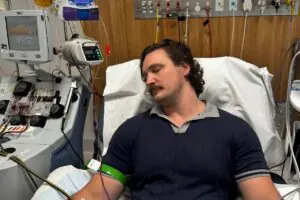
Stefan during his stem cell donation. Some people really do have a nap.
The other 10 percent donate under general anaesthetic. Doctors collect stem cells directly from the back of the hip bone. It takes about 45 minutes and you sleep through the whole thing. Either way, the final choice on how you donate is always yours. If you want the full breakdown, read what really happens when you donate stem cells.
What does it actually feel like
If there’s a part that’s going to bother you, it’s the injections in the days before donation, not the donation itself. Some donors feel achy, tired, or a bit fluish as their body ramps up stem cell production. Think of it like your bones are working overtime, because they are. Paracetamol and rest handle most of it, and the effects fade once donation is done.
On donation day, the most common thing people notice with the blood method is a tingly feeling around the mouth or hands. That’s a temporary calcium dip from the machine, and the team sorts it out straight away. Most say the whole thing was way easier than they expected.
If you donate through bone marrow, you’ll feel sore and bruised around the hips for a few days afterwards. Your backside is going to let you know it was involved for a little while, and then it moves on.
Your body replaces the donated stem cells within a few days or weeks. Over 1.5 million people worldwide have donated stem cells. This isn’t a science experiment. You go back to normal, and someone else gets a fresh start. For a more detailed look, read about the risks of donating stem cells.
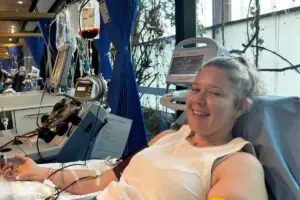
Abbey donated stem cells to a stranger. She said the whole thing was way easier than she expected.
Why finding a match is harder than you’d think
Stem cell matching isn’t like blood donation where a few types cover most people. It’s based on genetic markers called HLA markers that you inherit from your parents. The closer the match, the better the transplant outcome. The problem is there are thousands of possible combinations, and two people can share the same blood type without even coming close on HLA.
Ancestry matters too. You’re far more likely to match someone with a similar ethnic background. Patients from Aboriginal and Torres Strait Islander, Asian, Middle Eastern, African, Pacific Islander, or mixed-heritage backgrounds often face the longest searches because those communities are underrepresented on registries. For First Nations Australians, overseas registries offer very little help because the genetic diversity of Aboriginal and Torres Strait Islander peoples is unique to this country. Those matches need to come from here.
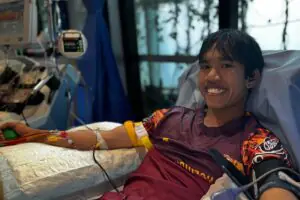
Charles donated stem cells through his blood. The whole process took five hours.
Right now, around 80 percent of stem cell donations for Australian patients come from overseas. More local donors from more backgrounds means shorter waits and better odds for everyone.
Ready to join
You might never get the call. Most people on the registry don’t. But if your stem cells are the ones someone needs, they’ll be incredibly grateful you signed up. In fact, you could be their only hope.
If you’re aged 17 to 35, in good general health, and have a Medicare card, it takes a few minutes online and a cheek swab at home. Sign up through the TLR Foundation’s partner page.
Be a legend. Save a life.