Stem cell transplant. Three words that sound like they belong in a medical textbook. But if you’ve ever wondered what actually happens when someone needs one, or whether you could be the person who helps, you’re in the right place.
Here’s the thing most people don’t realise. There isn’t just one type of stem cell transplant. There are four. And only one of them needs a donor. That’s where you come in.
What is a stem cell transplant?
Think of your blood as a system that needs constant rebuilding. Stem cells are the raw material that makes that happen. They’re the starting point for every red cell, white cell, and platelet your body produces. When blood cancer or another serious condition destroys that system, or when the treatment needed to fight it wipes it out, the body needs help starting again.
That’s what a stem cell transplant does. It gives the body a new set of building blocks so it can begin making healthy blood cells again.
Stem cell transplants are used to treat conditions like leukaemia, lymphoma, myeloma, and aplastic anaemia. They’re not a small thing. But for a lot of patients, they’re the difference between running out of options and getting more time.
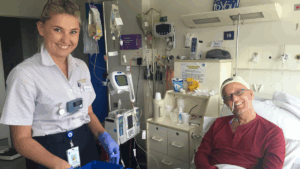
Trace Richey at the start of his stem cell transplant. His experience is the reason The TLR Foundation exists
The four types of stem cell transplants
Not all stem cell transplants work the same way, and not all of them need a donor.
Here’s a plain-language breakdown of each type and what makes it different.
Allogeneic stem cell transplant
This is the one that needs a donor. An allogeneic stem cell transplant uses healthy stem cells from another person, whether that’s a sibling, a family member, or a complete stranger who signed up to the stem cell donor registry.
Before the transplant, the patient goes through chemotherapy or radiation to clear space in their bone marrow and dial down their immune system. Then the donor’s stem cells are infused, and over time those cells start producing healthy new blood cells inside the patient’s body.
One of the most serious things doctors watch for afterwards is something called graft versus host disease, or GvHD. When the donated immune cells enter the patient’s body, they sometimes don’t fully recognise it as home. Instead of settling in, they start attacking healthy tissue. GvHD can be mild and manageable, or it can be severe and life-threatening, and it’s why finding the closest possible match matters so much.
Trace Richey, the man whose stem cell transplant is the reason The TLR Foundation exists, developed GvHD after his transplant. It’s why this organisation cares so deeply about growing the registry. Every new donor improves the odds of patients finding a match close enough to give them the best possible chance.
Autologous stem cell transplant
This one doesn’t need a donor at all. An autologous stem cell transplant uses the patient’s own stem cells, collected and stored before treatment begins. The patient then goes through high-dose chemotherapy, and their own cells are returned afterwards to help the body recover.
Because the cells come from the same person there’s no risk of GvHD. Autologous transplants are commonly used for lymphoma and multiple myeloma. No donor registry required.
Haploidentical stem cell transplant
A haploidentical transplant uses a half-matched donor, usually a close family member like a parent, child, or sibling.
It’s become a much more viable option in recent years as doctors have got better at managing the risks that come with a partial match, giving patients another option when a full registry match isn’t available.
Cord blood stem cell transplant
A cord blood transplant uses stem cells collected from umbilical cord blood right after birth, with the parents’ consent.
These cells are more flexible than adult stem cells so the match doesn’t need to be as precise, but there are fewer of them. This option tends to work better for children or smaller adults, and it can be exactly the right answer when adult donor cells aren’t available.
So where do you fit into all of this?
If you’re thinking about joining the stem cell donor registry, the allogeneic transplant is the one that involves you. You wouldn’t be having a transplant yourself. You’d be the reason someone else gets one.
Most donations happen through peripheral blood stem cell collection, which works a lot like a long plasma donation. A few days before, you have daily injections that encourage your body to push more stem cells into your bloodstream.
On donation day, blood goes out one arm through a machine that collects the stem cells, and everything else comes back through the other arm. No general anaesthetic. It usually takes four or five hours, and most donors are back to normal within a day or two.
For a full breakdown of what the process actually feels like, read What Really Happens to Your Body When You Donate Stem Cells.
The stuff people quietly Google before deciding
Will it hurt? Do I need time off work? Am I even eligible? Completely understandable questions to have before committing to anything.
Joining the registry costs nothing and involves nothing more than a few cheek swabs done at home. You won’t be contacted unless you’re a match for a real patient, and most people who join are never called at all.
If you’re matched, you’d go through a full medical assessment before anything happens and get to ask every question you have.
The injections before donation can make you feel a bit achy and tired, a bit like a flu. That’s your body doing exactly what it’s supposed to. It passes.
For a really honest look at what’s involved, read What Are the Risks of Donating Stem Cells?
How you can help
Right now there are people in Australia waiting for a donor match. Some will find one. Some won’t, and that’s not because the technology isn’t there. It’s because the registry doesn’t have enough people who share their tissue type.
If you’re aged 18 to 35 and generally healthy, you could be that match for someone. Registration takes a few minutes online, then a cheek swab kit arrives at your door. Most people who sign up will never be called. But for the person who finds their match because you joined, it’s everything.
Register through the TLR Foundation’s partner page.
Be a legend. Save a life.
References
TLR – Become a Stem Cell Donor