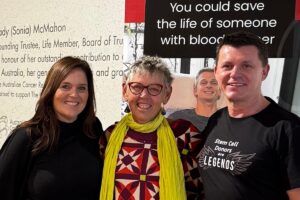
Before she ever needed help, Jenny Nixon was someone who gave it.
She had donated blood more than a hundred times. It was something she did quietly, without expecting recognition. She simply believed that if you could help, you should.
She never imagined she would one day be the one needing help.
In 2016, a routine blood test changed everything. Doctors diagnosed Jenny with myelodysplasia, or MDS. It’s a blood cancer where the body stops making healthy blood cells.
“I’d never heard of the word,” said Jenny “But it’s like anything. Unless you suffer from it, you really don’t know.”
Doctors tried other treatments first, but it quickly became clear they weren’t enough. A stem cell transplant became her only option.
And then the waiting began.
“I was incredibly lucky”
There were no stem cell matches in Australia to help her, so the search turned to the rest of the world. Then Jenny got the call. There was a match.
“I was incredibly lucky. I got a donor within a couple of months,” she said.
Not everyone does.
Her donor lived in Germany. He had joined the stem cell donor registry long before Jenny ever needed him. Like most people who sign up, he never expected to be contacted. He had simply added his name, willing to help if he ever matched with someone.
Then one day, he was asked if he would donate. He said yes.
That decision made her transplant possible. It gave her a second chance at life.
When life slowly returned
Thankfully, the transplant worked.
Recovery wasn’t instant. There were appointments, uncertainty and long stretches of rebuilding strength. But gradually, life began to feel steady again.
Everyday plans returned. Time with family. Looking ahead instead of bracing for bad news.
A stem cell transplant isn’t a finish line. It’s a reset. For Jenny, it meant years she wasn’t sure she would have. Years she filled with gratitude.
And then it happened again
In 2022, another routine blood test brought devastating news. Jenny had developed a different blood cancer.
She was back in the place she had hoped she’d left behind.
Once again, a stem cell transplant was needed and her future would depend on someone she had never met.
Doctors began searching the stem cell donor registry for a match. Somewhere out there, another person had already signed up.
When the call came, they said yes. The second donor also lived in Germany.
Finding one matching donor is rare. Finding two for two different blood cancers is extraordinary.
That second yes made a third chance possible.
A second yes, a third chance
The second donor also lived in Germany. They’d joined the stem cell donor registry long before Jenny ever needed them. They didn’t know her. They hadn’t met her. When the call came, they said yes too.
That’s not a coincidence. Australia relies heavily on overseas stem cell donor registries, especially Germany’s, where signing up as a stem cell donor is widely understood and encouraged.
Finding one matching donor is rare. Finding two is even rarer. That second yes made a third chance possible.
Meeting the man who saved her life
After her recovery, Jenny was able to meet her first donor.
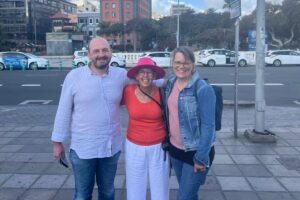
In Australia, donors and recipients don’t connect straight away. There’s a two year waiting period. Messages stay anonymous and go through Stem Cell Donors Australia. Contact only happens later on, once everyone’s had time to recover and only if both people are comfortable.
When that moment finally came, Jenny met Lars.
“When I finally met my donor, I was overwhelmed,” she said. “You can’t really put into words what it means to meet someone who gave you your life back.”
Two amazing people standing together, connected by a decision made years earlier.
Lars didn’t see himself as extraordinary. But to Jenny, he always will be.
Meeting him made something clear. Stem cell donors don’t think of themselves as superheroes. They’re everyday people who signed up, and when the moment came, they said yes We call them legends.
Two donors who said yes.
Why stories like Jenny’s matter
Most people will never need a stem cell transplant. But for those who do, everything depends on whether a match already exists on the stem cell donor registry.
Jenny didn’t receive two second chances because someone rushed to sign up when she got sick. She received them because two people had joined long before she ever needed them.
Registering to be a stem cell donor isn’t about predicting who will need you. It’s about being there, just in case.
And if the call ever comes, it means you’re the reason someone else gets more time.
What stem cell donation actually involves
If you’re curious but unsure, you’re not alone.
Donating stem cells often sounds bigger and scarier than it really is. For most people, the reality is much simpler, and most who sign up will never be called. If you want to understand what’s involved, how signing up works, and what donation usually looks like for donors, we’ve broken it down clearly here.
No pressure. Just clear information so you can decide when you’re ready.
If you’re ready
Jenny is here because two people were already on the stem cell donor registry when she needed them.
Most people who sign up will never be called. But for the person who is, it can change everything.
If you’re aged 18 to 35, in good general health, and eligible for Medicare, you can join the Australian stem cell donor registry through The TLR Foundation. Signing up takes a few minutes and starts with a few simple cheek swabs.
Be a legend. Save a life.
References
TLR – Become a stem cell donor
Stem Cell Donors Australia – When can I contact my recipient